Training · RHCA Safety Council
Construction Safety Training
The RHCA Safety Council offers OSHA-approved training across Texas, including the Dallas-Fort Worth and Houston areas. These trainings cover essential aspects such as fall protection, hazard prevention strategies, rescue procedures, and more.
Get the OSHA construction safety training you need in English or Spanish.
We offer a wide range of OSHA-approved construction safety training courses in both English and Spanish. This training can be tailored to your needs, so you can be sure you’re getting the most out of your learning experience. We also offer various scheduling options so you can find a day and time that works for you.
OSHA 10 & OSHA 30
Outreach certification classes for workers and supervisors.
CPR, First Aid & AED
Emergency response for the jobsite.
Rigging Safety
Safe lifting, slings and load handling.
Silica Hazards
Exposure control and respiratory protection.
Competent Person
Qualification to identify and correct hazards.
Trench Safety
Excavation hazards and protective systems.


OSHA certified · RHCA Safety Council
OSHA 30-Hour Certification Classes 2026
Classes available in English and Spanish. Registration is required. Class dates are subject to change.
- Register (opens in a new tab)
Next class · Spanish
OSHA 30-Hour Training
September 15, 16, 17 and 18, 2026 · 8:00 AM – 5:00 PM
RHCA Headquarters & Training Center
2210 W. Illinois Ave, Dallas, TX 75224
OSHA 30-Hour Classes
Dallas · English & Spanish
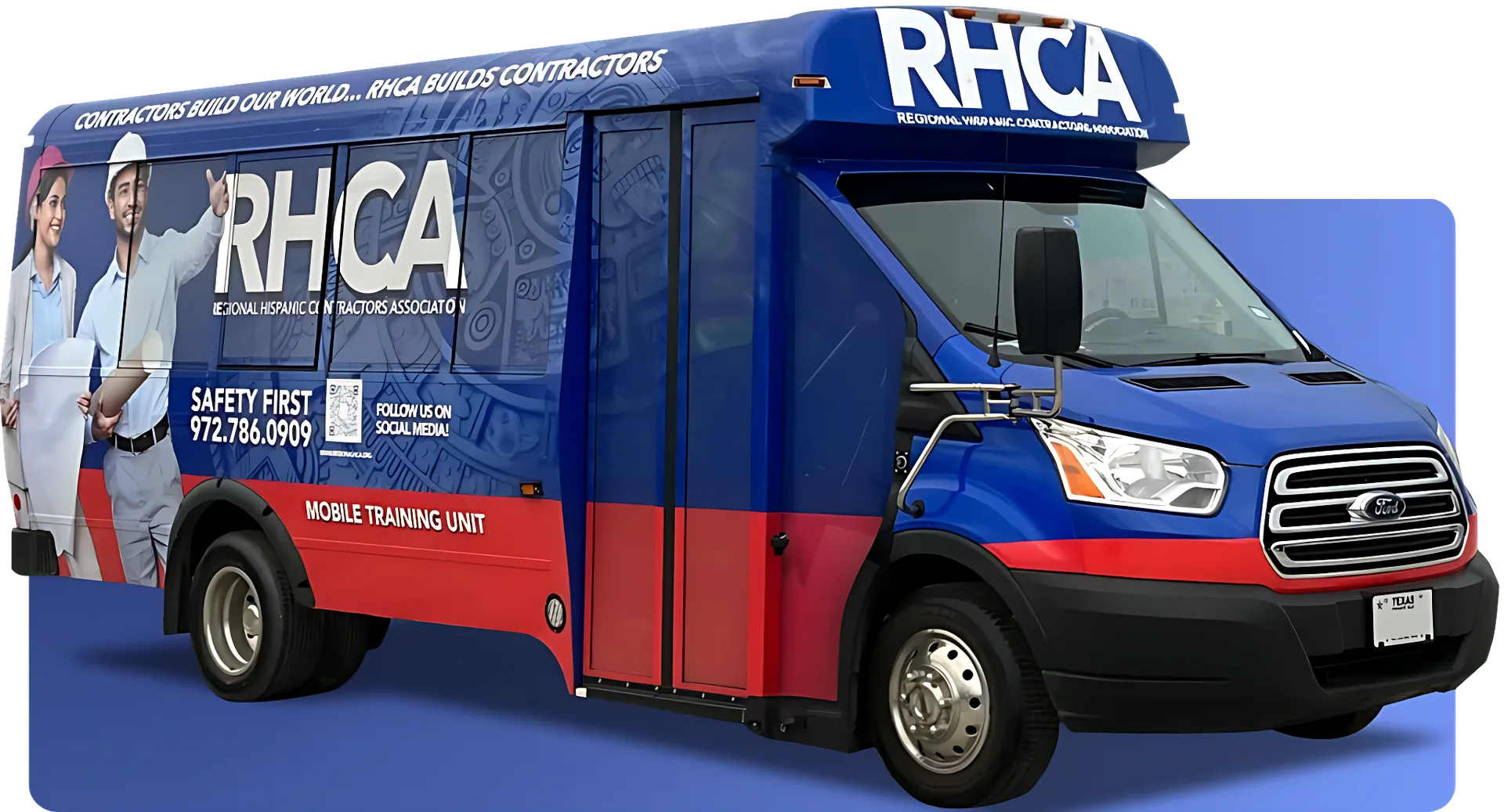
RHCA Mobile Training Unit
Need a personalized training?
We can take Construction Safety Training to your job site or your place of need. Classes are provided by the RHCA Safety Council in Dallas, Fort Worth, Houston and Austin.
Carlos Montes
carlos@regionalhca.orgJulio Florez
julio@regionalhca.org
Construction Suicide Prevention Week
Together we can save lives.
In 2019, a mission-driven group of volunteers from across the construction industry came together with the goal of saving lives. They collaborated to launch the inaugural Suicide Prevention Week for the industry — a week dedicated to raising awareness about the higher-than-average number of suicides in the construction industry, and to providing resources to help prevent those deaths.
Every year, during September — National Suicide Prevention Month — the construction industry dedicates a week to raising awareness about the unique challenges workers face in construction that lead to suicide and what we can do to prevent it. Together, we can save lives.
Resources from OSHA
Four fact sheets, transcribed below. Open one to read it; each has a link to the original sheet.
Working Together to Address Workplace Stress and Mental HealthMany factors cause stress. Let’s work through it together.
Employers can
- Create a judgement-free, shame-free workplace.
- Be transparent.
- Provide access to mental health resources (workplace, state and federal programs).
- Encourage workers to seek help when needed.
- Train managers and supervisors to recognize and talk about mental health and substance use.
Workers can
- Talk with coworkers and supervisors about workplace stress.
- Share ideas about reducing workplace stress with management.
- Take advantage of existing mental health resources.
- Ask for help when needed.
Employers and workers together can
- Talk openly about workplace stress and collaborate in identifying solutions.
- Monitor one another and talk about mental health concerns: learn the signs and symptoms of distress, including substance use and risk factors for suicide; watch for changes in attitudes and behaviors; tell someone if a person’s signs or symptoms worry you.
Reducing workplace stress benefits everyone through
- Enhanced quality of life
- Lower blood pressure
- Stronger immune system
- Better sleep
- More positive outlook
- Increased productivity
- Improved morale
- Fewer sick days
- Better focus
- Fewer workplace injuries
Support One Another: How to Talk to Your Coworkers About Mental HealthFeeling the effects of workplace stress or worried about your coworkers? Here are some tips.
1. Be respectful
- Check on your coworkers. A simple “How’s it going?” could start a meaningful conversation. If someone does not want to talk, be respectful and say that you are available to listen at another time.
- Questions to get the conversation going: How are you feeling? Are you keeping in touch with your support system, like family and friends? How can I help?
2. Listen compassionately
- If someone wants to talk, give them your undivided attention. Put away devices, make eye contact, keep an open body position, and listen without judgement.
3. Determine if more assistance is needed
- Signs someone might need additional support: eating or sleeping too much or too little; pulling away from people; low or no energy; unexplained aches and pains; feeling helpless or hopeless; excessive smoking, drinking or drug use; worrying a lot of the time; feeling guilty but not sure why; thinking of self-harm or suicide.
- It may not be appropriate to offer advice, but do share resources or information about how to get help, such as your human resources department or an employee assistance program.
4. Check back later
- It can be hard to strike a balance between checking in and giving space. If your concern comes from a sincere place, your coworkers will likely appreciate that you care enough to check in, listen and provide reassurance when they need it.
Suicide Prevention: 5 Things You Should KnowSuicide is a leading cause of death among working-age adults in the United States. Like other workplace fatalities, suicides can be prevented.
1. Be aware: everyone can help prevent suicide
- Mental health and suicide can be difficult to talk about, especially with work colleagues, but your actions can make a difference. When you work closely with others, you may sense when something is wrong.
2. Pay attention: know the warning signs
- There is no single cause for suicide but there are warning signs. Changes in behavior, mood, or even what they say may signal someone is at risk. Take these signs seriously. It could save a life.
3. Reach out: ask “Are you okay?”
- If you are concerned about a coworker, talk with them privately and listen without judgment. Encourage them to reach out to your Employee Assistance Program, the human resources department, or a mental health professional.
4. Take action: if someone is in crisis, stay with them and get help
- If you believe a coworker is at immediate risk of suicide, stay with them until you can get further help. Contact emergency services or the 988 Suicide and Crisis Lifeline.
5. Learn more: resources are available
- Call or text the Suicide and Crisis Lifeline at 988.
- Visit the American Foundation for Suicide Prevention (afsp.org) to learn more about suicide risk factors, warning signs, and what you can do to help prevent suicide.
Helping Your Coworkers and Yourself: Address Mental HealthHas workplace stress increased? Here’s some advice on ways to help others and help yourself.
Senior managers can
- Educate staff: build awareness, knowledge and acceptance about stress and mental health issues.
- Provide support and assistance: offer workplace support programs, an employee assistance program or other referral services.
- Develop skilled leaders: provide supervisors with training to understand and talk about stress or mental health issues with workers.
- Promote a judgement-free workplace: make it clear that workers can ask for help without fear of negative consequences.
Coworkers and supervisors can
- Educate themselves: learn about the signs and symptoms of stress and mental health issues.
- Treat everyone with respect: you never know who is struggling with stress or mental health issues.
- Support each other: ask your coworkers how they are doing and let them know you are available to talk.
- Listen without judgement: listen with undivided attention and acknowledge your coworkers’ feelings. Offer help or resources if available and warranted.
If you are facing a mental health challenge
- Don’t allow self-doubt or shame: know that you are not alone.
- Understand your triggers: events or circumstances that cause mental health symptoms, such as excessive fear or worry.
- Get help or treatment: reach out to your human resources department or a hotline for help, such as the Disaster Distress Helpline or the 988 Suicide & Crisis Lifeline.
- Be a champion: use your experience to help others.
Fact sheets by the Occupational Safety and Health Administration · osha.gov/workplace-stress · 1-800-321-OSHA (6742)
Safety resources
Industry campaigns
Safe + Sound Week
A nationwide event held each August that recognizes the successes of workplace health and safety programs and offers information and ideas on how to keep America’s workers safe.
Why participate? Successful safety and health programs can proactively identify and manage workplace hazards before they cause injury or illness, improving sustainability and the bottom line. Participating can help get your program started, energize an existing one, or recognize your safety successes.
Who participates? All organizations looking for an opportunity to recognize their commitment to safety are welcome to participate. Last year, more than 3,300 businesses helped to raise awareness about workers’ health and safety.
OSHA event archiveOSHA Compliance Assistance Specialists
How can a CAS help me?
Compliance Assistance Specialists in OSHA’s Regional and Area Offices around the country provide outreach to a variety of groups free of charge: small businesses and other employers, trade and professional associations, union locals, and community and faith-based groups.
They provide general information about OSHA’s compliance assistance resources and how to comply with OSHA standards, are available for seminars, workshops and speaking events, and help implement OSHA’s cooperative programs, including the Voluntary Protection Programs, the Strategic Partnership Program and the Alliance Program.
How do I contact my local CAS?
Check the Compliance Assistance Specialist Directory for the CAS in your local office.
What if I’m in a state with an OSHA-approved program?
Contact your local State Plan office for compliance assistance.
Compliance Assistance Specialists in action
- Construction
- Fall Prevention
- Heat Illness Prevention
- Recordkeeping
- Severe Weather
- Small Business
- Suicide Prevention
- Trenching and Excavation
- Underserved Workers
- Youth/Teen Workers
RHCA committees
Join the RHCA Safety Council Committee
It serves as a subject matter expert panel to advise the RHCA on construction safety issues and health matters by providing health and safety field input and perspective. Develops the RHCA Construction Safety Program, provides guidance, and reviews the resolution of construction safety issues.